When people picture Aruba they usually imagine palm trees swaying over white sand beaches and bright blue water. What they do not often think about is how much of the island lives outside the resort areas in places where time feels slower and traditions still shape daily life.
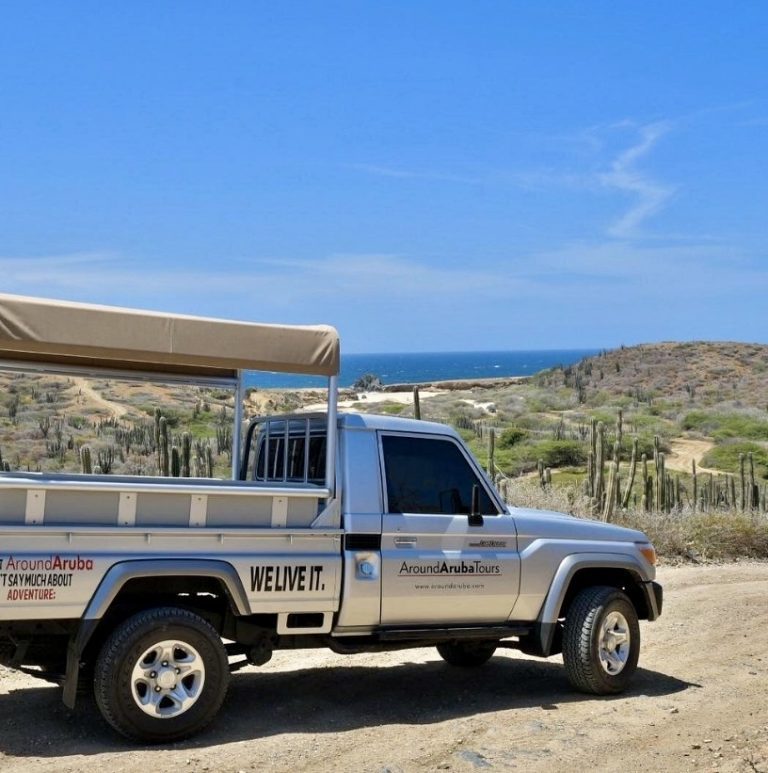
The island may be small but it contains many worlds within it. There is the rugged north coast where the wind never stops and waves crash against black volcanic rock. There is the inland countryside known as cunucu where cactus fences mark old properties and goats wander freely. These areas are not built for postcards but for living and they tell the story of how Arubans have adapted to their environment for centuries.
A Landscape Shaped by Scarcity
One of the first surprises for many visitors is that Aruba has no natural rivers. Fresh water was once so scarce that survival depended on careful collection. People built stone wells and cisterns to store rainwater and these were often shared among families. Even the shape of villages was influenced by where the best water sources could be found.
This scarcity also shaped architecture. Many old houses have thick walls made of coral stone and lime, with small shaded windows to keep the inside cool. Roofs were designed to direct rainwater into storage containers. You can still see these pastel painted houses in towns such as Santa Cruz and Savaneta. They are not only beautiful but also a living record of how people designed their homes for survival long before air conditioning existed.
The Wind That Never Leaves
The constant east trade winds are one of the island’s most defining features. They blow year round and influence almost everything. The iconic divi divi trees grow with their branches permanently leaning westward, shaped by decades of wind. Fishermen anchor their boats facing into the breeze to avoid damage. Even the placement of gardens and fences takes the wind into account.
For travelers this means that outdoor activities have a rhythm of their own. If you rent a bicycle or go for a hike in Arikok National Park, expect one direction to feel easy and the other to test your strength. The same wind that cools your skin under the sun can quickly tire you if you work against it.
A Blend of Cultures and Traditions
Aruba’s cultural identity is a rich blend that reflects centuries of history. The island has been influenced by Indigenous Arawak roots, Spanish colonial presence, African heritage from the transatlantic trade, and Dutch governance. The result is a society where languages blend naturally. You may see a Dutch street name, hear Spanish in the marketplace, and listen to Papiamento in a conversation between friends.
Music and food carry these influences as well. Tambu rhythms echo African traditions. Folk songs preserve stories of the past. Local dishes such as cabrito stoba and pan bati bring together Indigenous and European flavors. Early mornings often begin with pastechi from a family bakery and fishermen still bring in their catch by hand.
Discovering the Details
For visitors the lesson is simple. The beaches are beautiful but Aruba’s soul is in the details you find when you wander beyond them. A drive inland can take you past ancient wells, traditional cunucu houses, and roadside stands selling cocada or fresh tamarind juice. You might come across a domino game in a town plaza or a craftsman carving wood under the shade of a tree.
These quiet moments are often missed by those who never leave the shoreline. Yet they are what connect you to the island’s true rhythm. Aruba is not only a place to see but a place to feel.