Beyond Aruba’s famous white-sand beaches and luxury resorts lies an entirely different landscape—one shaped by wind, time, and history. Arikok National Park, which covers nearly twenty percent of the island, protects a dramatic stretch of terrain made up of volcanic hills, limestone cliffs, desert plains, and hidden coves. It is the heart of Aruba’s natural heritage and a living record of the island’s geological and cultural past.
A Sanctuary of Rare Wildlife
Arikok National Park is home to animals that exist nowhere else on Earth. Among its most distinctive species are the Aruban burrowing owl (Shoco), the Aruban whiptail lizard (Cododo), and the Aruban rattlesnake (Cascabel)—all of which have adapted to the park’s dry and rugged conditions. Visitors often spot iguanas basking on sunlit rocks, while colorful birds like hummingbirds, troupials, and warblers dart between the cacti and divi-divi trees. The park’s diverse habitats, from arid hills to pockets of lush vegetation, make it a haven for both resident and migratory wildlife.
Ancient Echoes of the Arawak People
Long before modern settlements, the Caquetío branch of the Arawak people lived within the area that is now Arikok National Park. Their presence is still visible in the Fontein Cave, where ancient petroglyphs—drawn in red ochre—decorate the limestone walls. These carvings are among the most significant archaeological sites on the island, offering a glimpse into the spiritual world of Aruba’s first inhabitants. Nearby, Sero Arikok, the hill that gives the park its name, rises 185 meters above sea level and provides panoramic views that stretch across the island’s rugged interior to the Caribbean Sea.
A Landscape Formed by Fire and Time
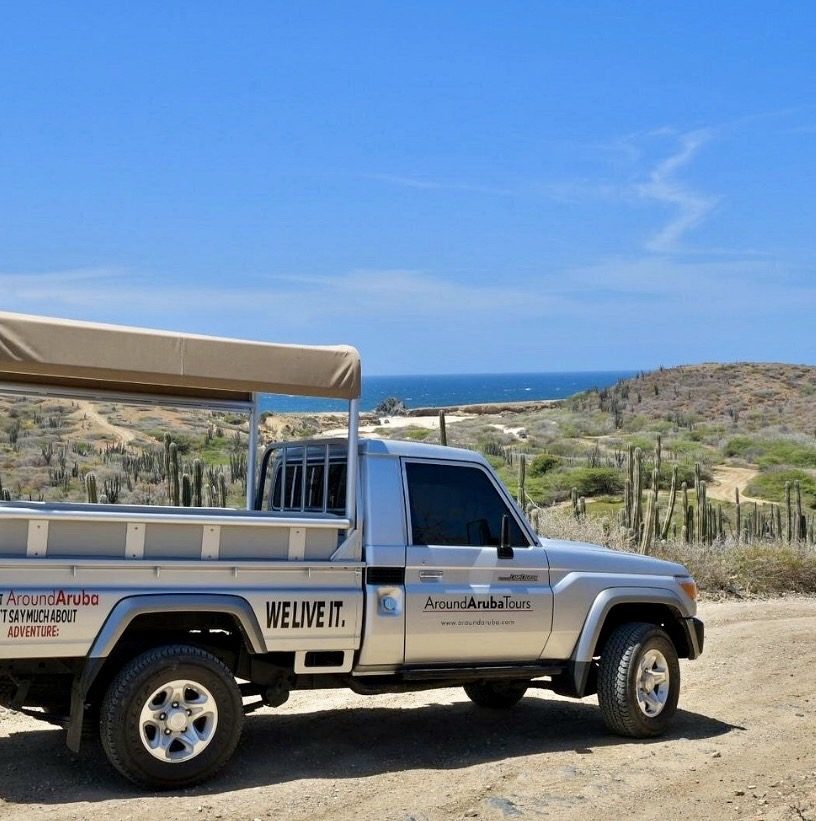
The terrain of Arikok reveals the island’s volcanic origins. Much of the ground consists of lava rock and quartz diorite, shaped millions of years ago by intense geological forces. The sharp cliffs, dry riverbeds, and scattered boulders tell a story of erosion and resilience. Visitors can explore this landscape in several ways: hiking along marked trails, joining guided horseback tours, or driving along designated unpaved routes in a four-wheel-drive vehicle.
Natural Landmarks to Explore
Within the park are several must-see locations that highlight Aruba’s raw beauty. Guadirikiri Cave is famous for the natural light beams that shine through openings in the ceiling, illuminating colonies of harmless bats. Fontein Cave attracts visitors with its rock art and intricate limestone patterns, while Dos Playa—meaning “two beaches”—features twin coves where waves crash dramatically against the shore. Boca Prins, known for its striking cliffs and turquoise surf, is a favorite stop for photographers, and Moro Beach, often called “Little Aruba,” features a small island-shaped rock formation just offshore.
Conservation and Education
Established in 1995, Arikok National Park is managed by the Fundacion Parke Nacional Arikok, which works to protect native flora and fauna while promoting sustainable tourism. The park’s entrance fees directly support conservation programs, habitat restoration, and environmental education for local schools. Visitors can also join guided eco-tours led by park rangers who share insights about the fragile desert ecosystem. Over the years, the park has become a model of how tourism and conservation can coexist.
Planning Your Visit
Exploring Arikok National Park offers a chance to experience Aruba at its most authentic. Whether you choose to hike through dry valleys, discover ancient caves, or simply sit quietly and listen to the wind move through the cacti, the park reveals an untamed side of the island that many travelers overlook. The visitor center, located near the entrance, provides maps, trail information, and guided tour options. It is best to visit early in the day to avoid the midday heat, bring plenty of water, and wear sturdy shoes.
Arikok National Park is more than a scenic attraction—it is the soul of Aruba, where nature, history, and culture meet. A day spent here offers perspective on how this small island has been shaped by both the elements and the people who have called it home for thousands of years.